

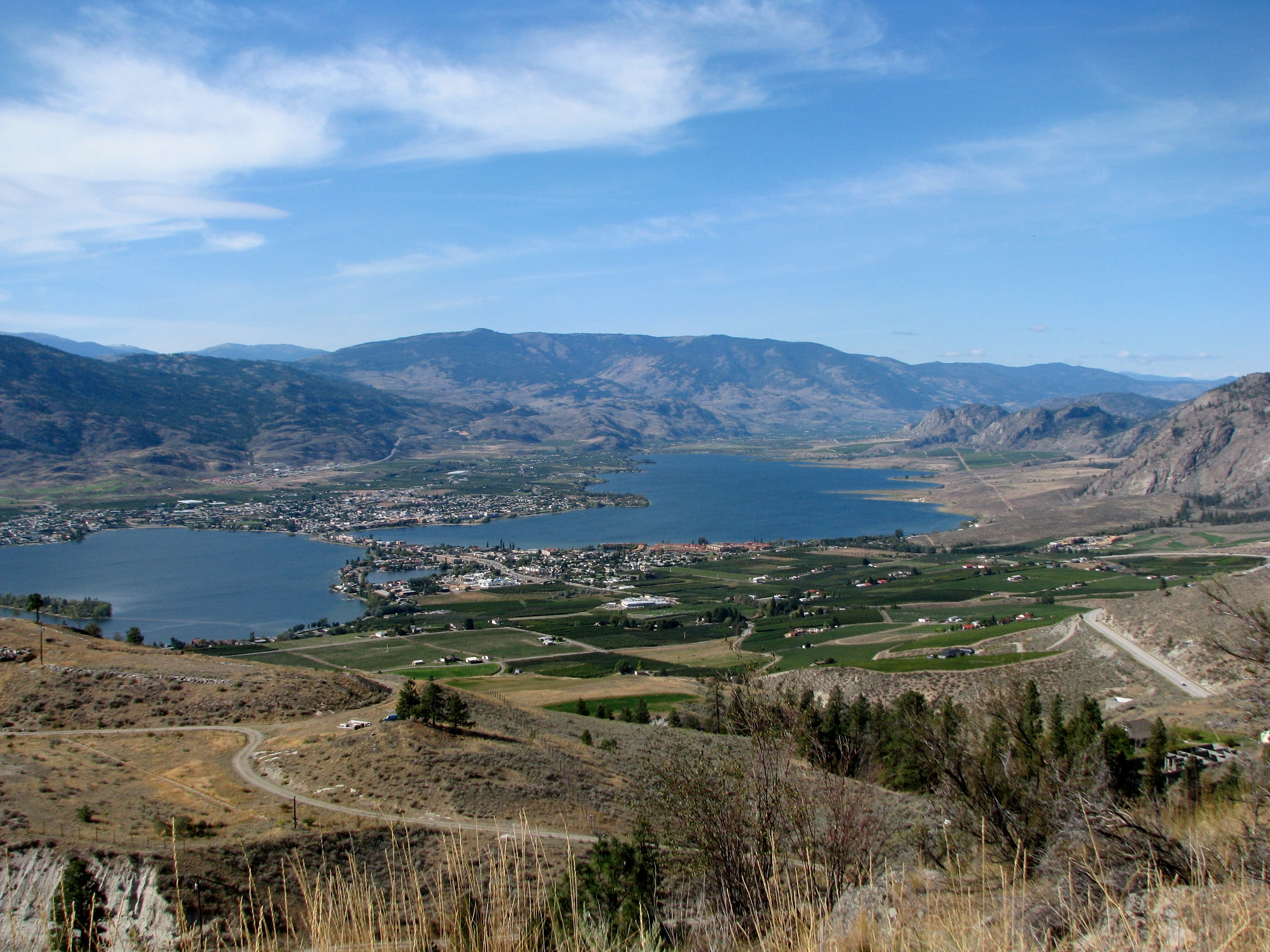
Radon Testing & Mitigation in Oliver, BC
Radon testing and mitigation in Oliver, where agricultural land, slab-on-grade construction, and South Okanagan geology meet.
What's under Oliver
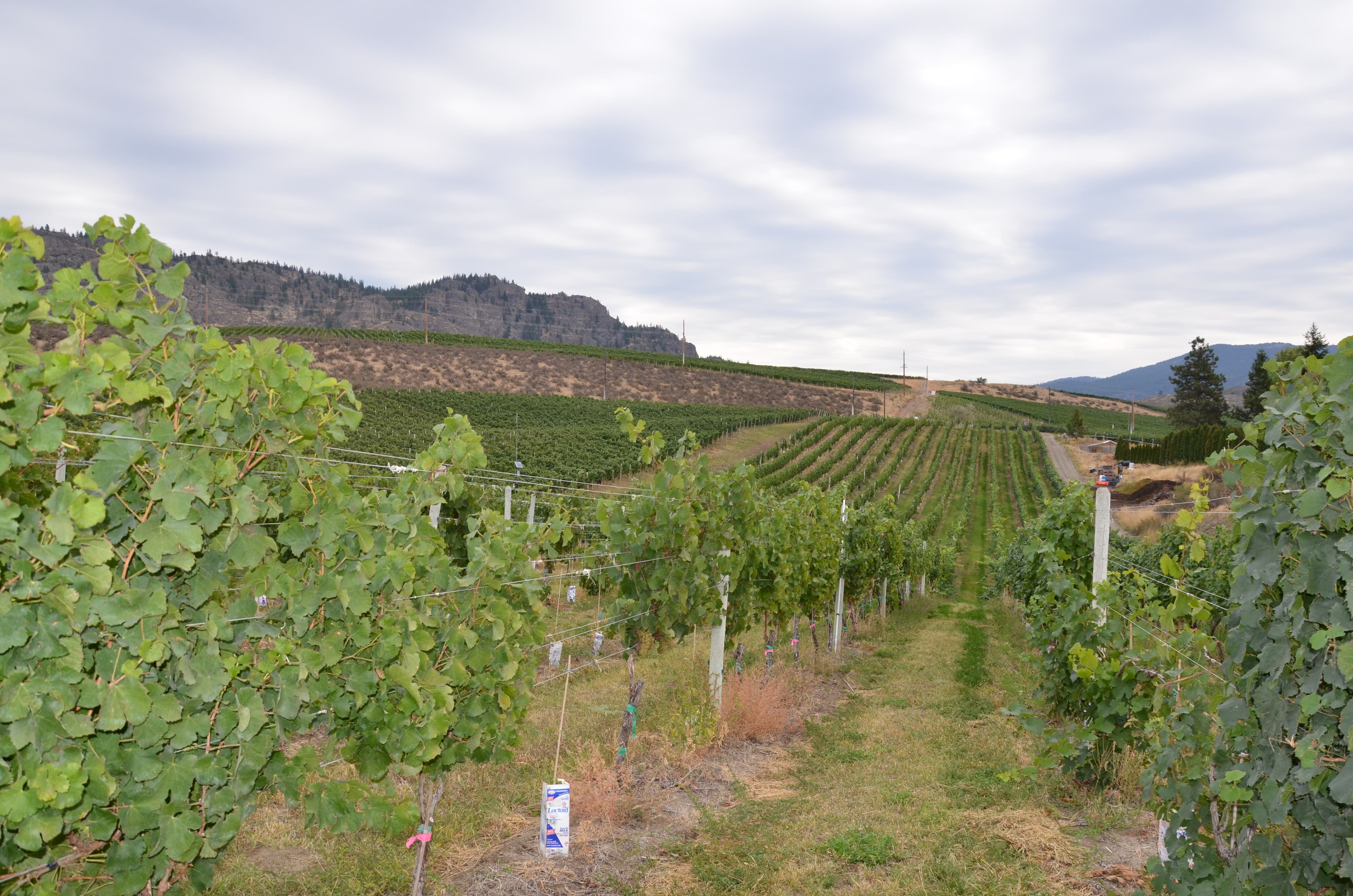
Oliver sits in the South Okanagan, where the valley widens into agricultural land and the geology shifts somewhat from the granitic-dominated central valley toward a broader mix of glacial outwash and valley-bottom alluvial soils built up by the Okanagan River. Much of the surrounding land is orchard and vineyard, historically irrigated valley-bottom terrain, and the underlying soil profile in these flatter agricultural areas tends to be deeper than the thin bench soils found in hillside communities further north. Decades of irrigation for orchard and vineyard use have also altered soil moisture patterns on many properties compared to their natural state, which is one more local variable layered on top of the underlying geology.
Foundations vary across the area
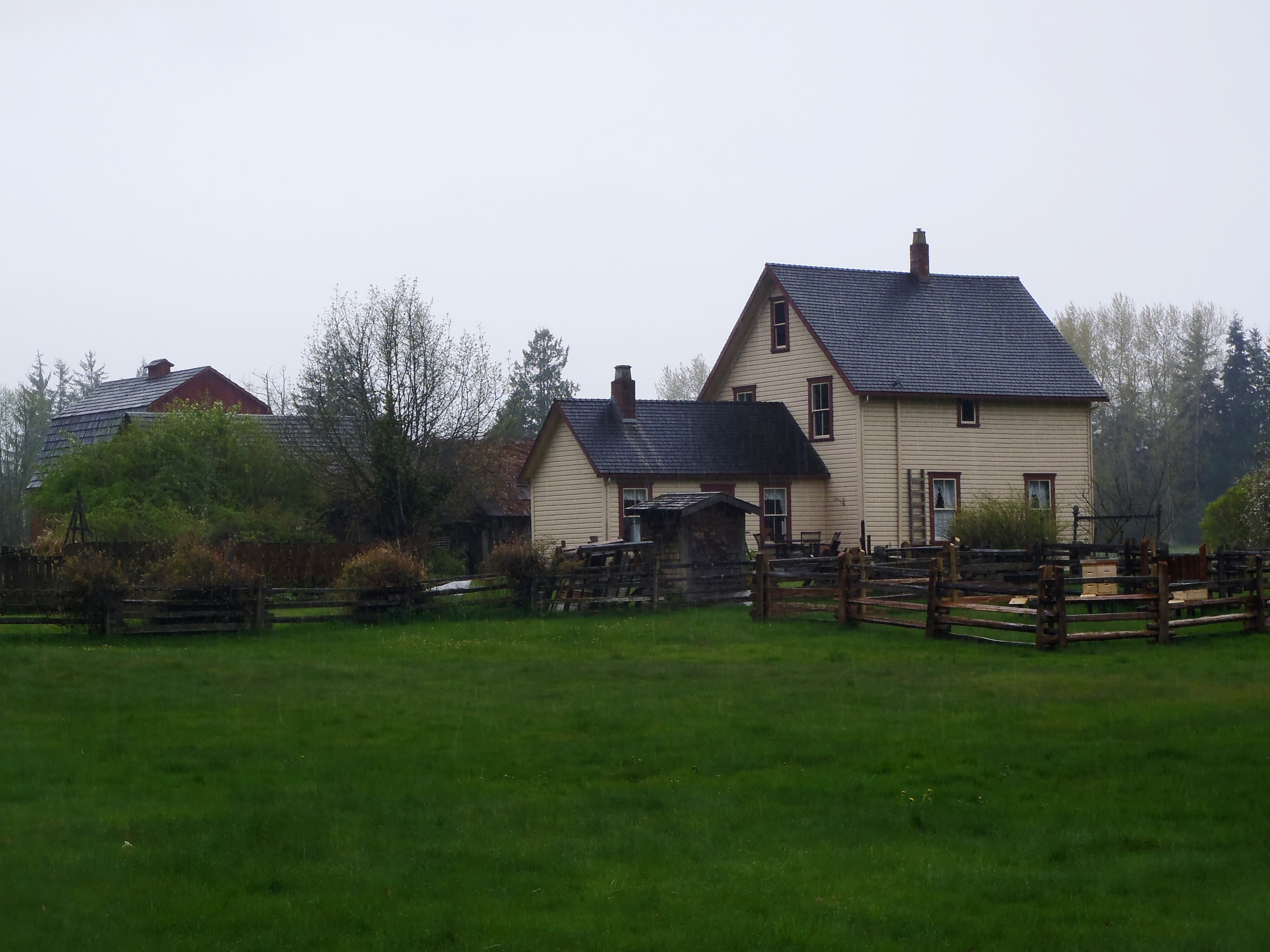
Oliver has a higher proportion of crawlspace and slab-on-grade construction than the basement-dominated housing stock typical of Kelowna or Vernon, partly a reflection of the area's rural and agricultural building history. Slab-on-grade homes have no basement or crawlspace at all — the living space sits directly on a concrete slab poured on grade — which is a different mitigation problem from a basement: suction points typically go through the slab itself rather than into a below-grade space, and testing placement has to account for there being no lower level to measure. Older farmhouses scattered through the surrounding orchard and vineyard land often have partial basements or root-cellar-style below-grade spaces that don't match either the slab-on-grade or full-basement pattern cleanly, which is another reason a site visit, not a foundation-type assumption, drives the mitigation plan.
What we typically install here
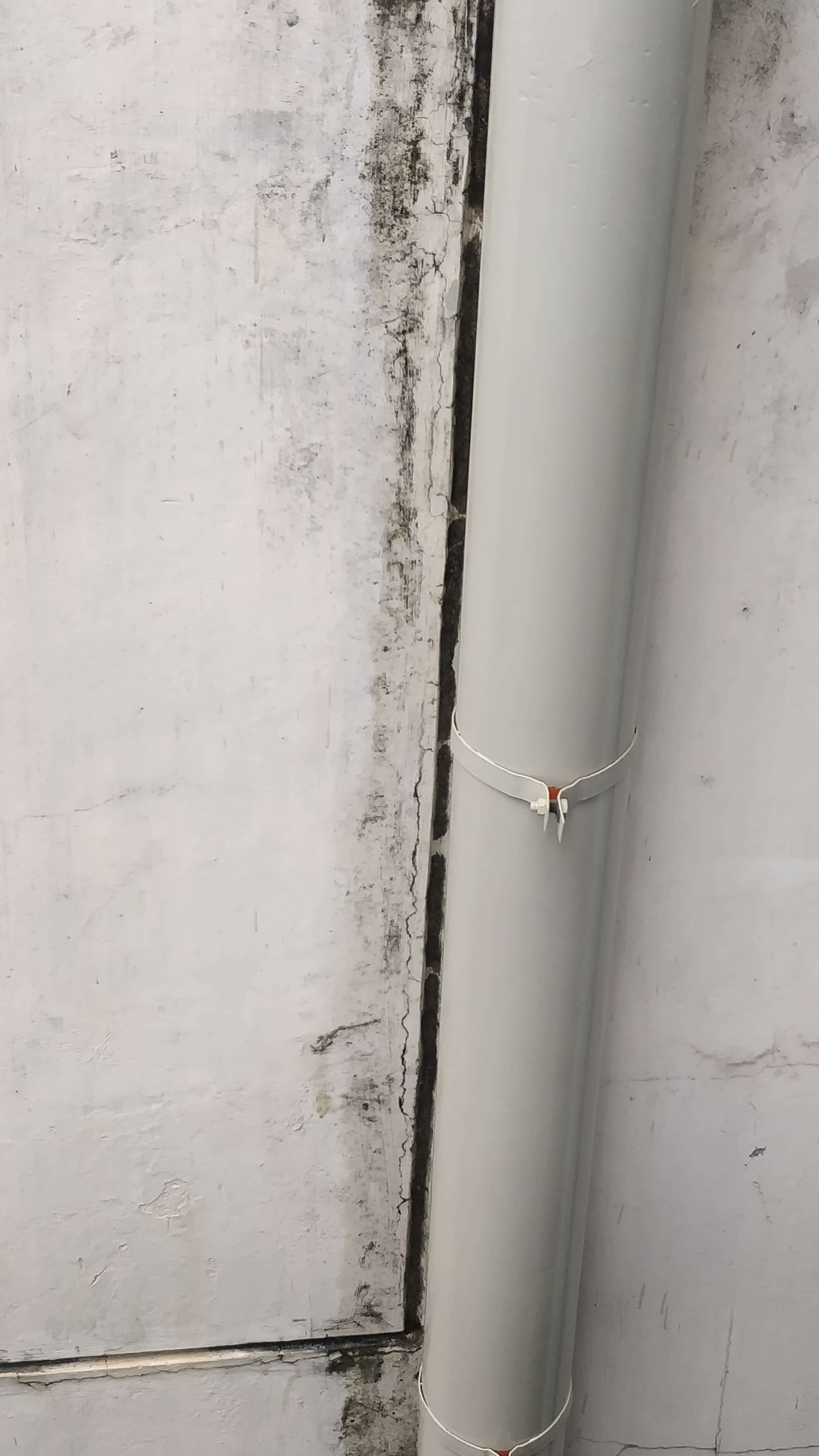
Full basements and slab-on-grade construction dominate here, so sub-slab depressurization — a fan drawing radon-laden air from beneath the slab and venting it above the roofline — is the typical install.
See how radon testing, mitigation, and ongoing monitoring work in more detail.
Oliver FAQ
Yes — newer residential subdivisions closer to town follow more consistent modern construction standards, while older rural and farm properties vary considerably in foundation type and age, which is why we assess each on its own.
With no basement or crawlspace, testing happens in the lowest occupied room of the home itself rather than a below-grade space. Placement and duration follow the same Health Canada protocol either way — a 90-day-minimum long-term test in a room where people spend real time.
Land use itself (orchards, vineyards) doesn't change radon potential — that's driven by the geology and soil beneath a specific building, not what's grown on the surface nearby.
Yes — retrofitting a slab-on-grade home means core-drilling through the existing slab to install a suction point, which is more involved than a basement retrofit but a well-established technique.
Those don't fit neatly into either category, so we treat them as their own case — testing still targets the lowest occupied space, and mitigation design depends on what we actually find beneath the house.
Not the testing itself, which happens indoors regardless of what's growing outside — but altered soil moisture from decades of irrigation is one more reason we assess sub-slab conditions directly rather than assume based on the surrounding land use.
Book a test in Oliver
Testing comes first. If your result calls for mitigation, we'll design and verify a system for your foundation.