

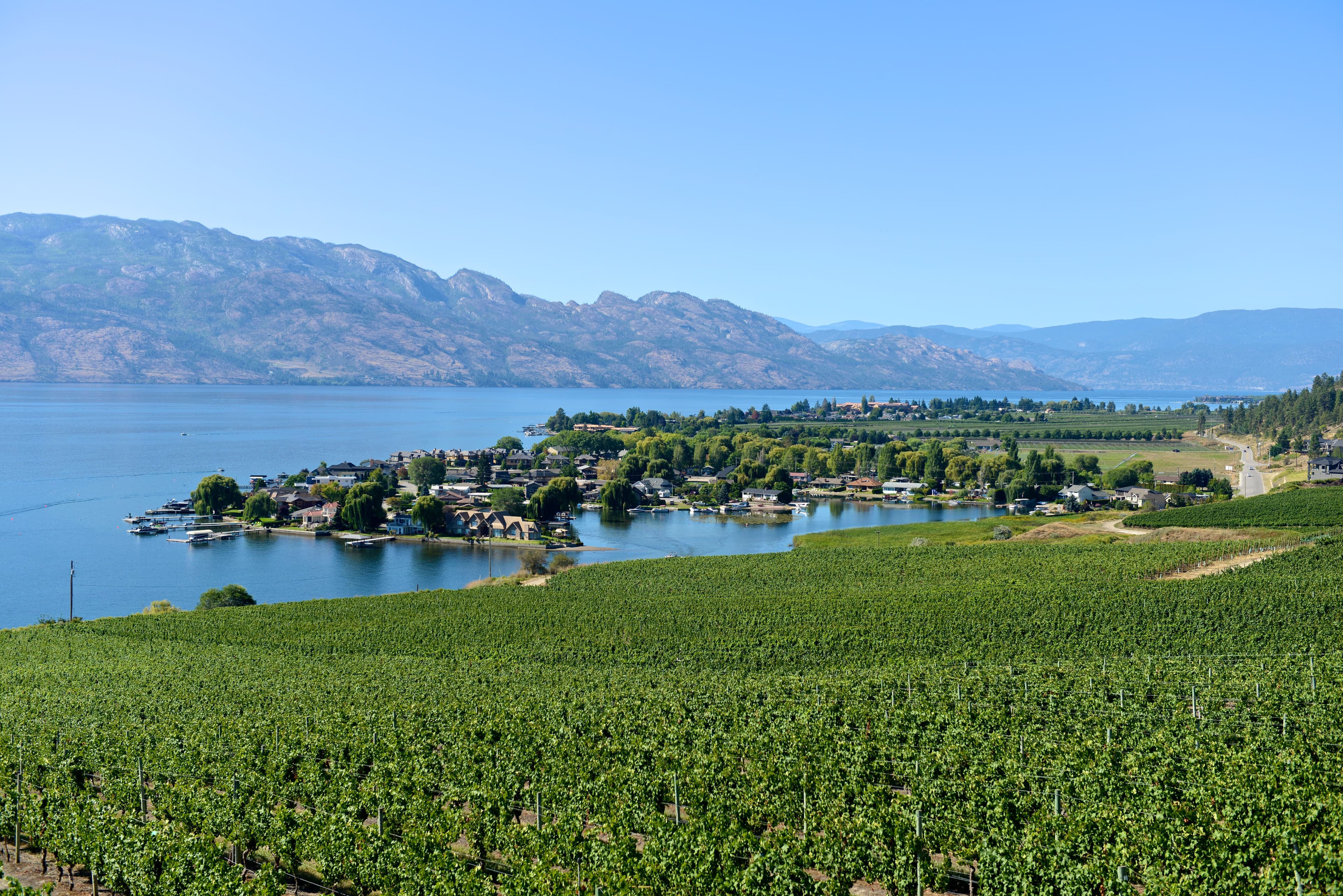
Radon Testing & Mitigation in West Kelowna, BC
Radon testing and mitigation built around West Kelowna's hillside lots — walkout basements, shallow bedrock, and slope-built crawlspaces.
What's under West Kelowna
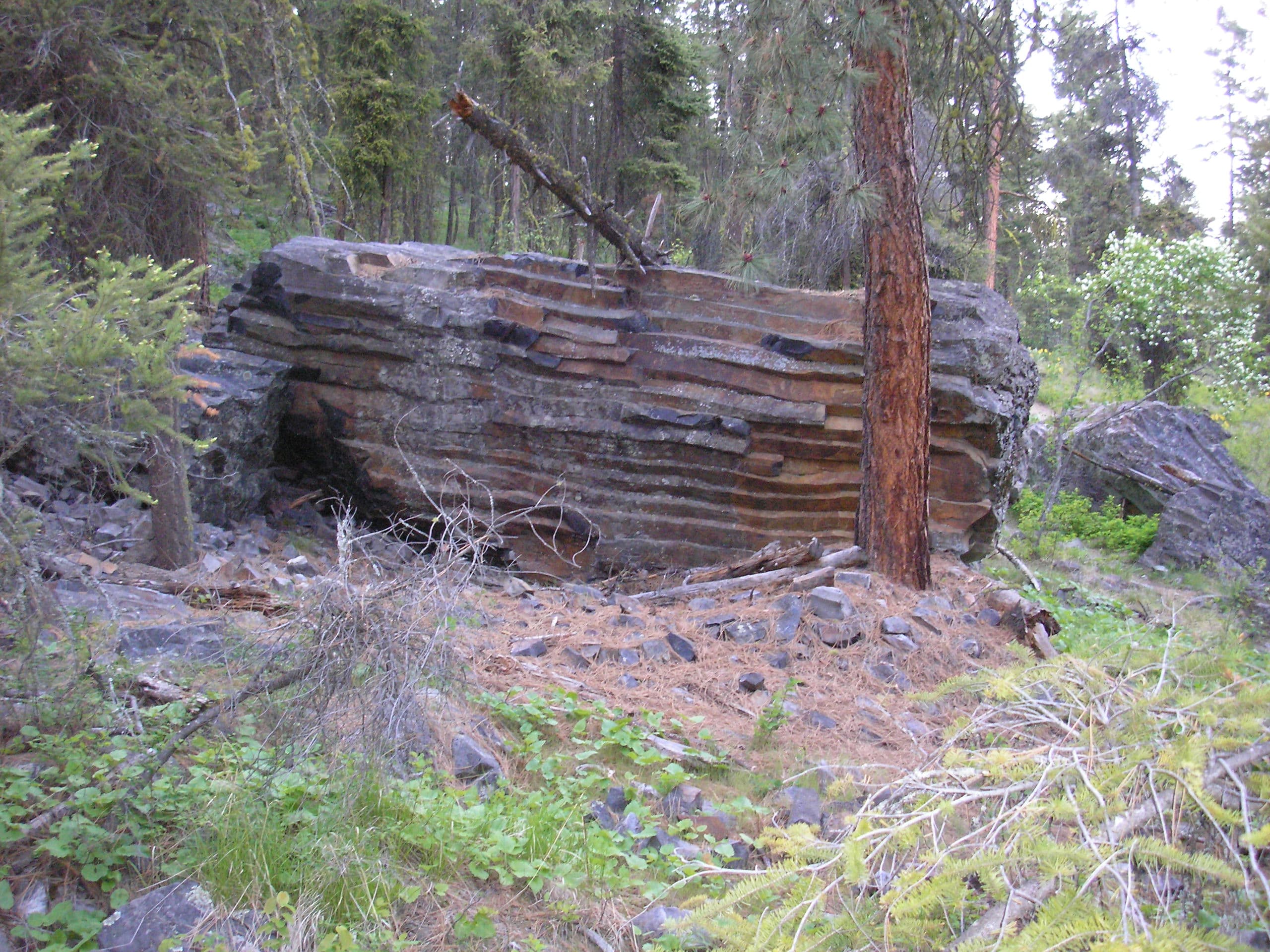
West Kelowna climbs steeply from the lake up the west-side slopes, and that topography is the dominant fact about its geology from a radon standpoint. Bedrock is often shallow here, sometimes close enough to the surface that excavation for a foundation exposes it directly. Where soil cover is thin, radon generated in fractured granitic bedrock has a shorter, more direct path upward than it would through the deep valley-bottom sediments found in flatter parts of the Okanagan. Slope also concentrates groundwater movement through bedrock fractures in ways that can create localized higher-radon pockets that don't follow a simple neighbourhood-wide pattern. Rock excavation is common practice for hillside foundations here, and the blasted or cut rock face that often borders a West Kelowna basement or crawlspace is a direct illustration of just how little soil buffer separates some homes from bedrock — a genuinely different starting condition than a valley-bottom home sitting on many metres of glacial fill.
Foundations vary across the area
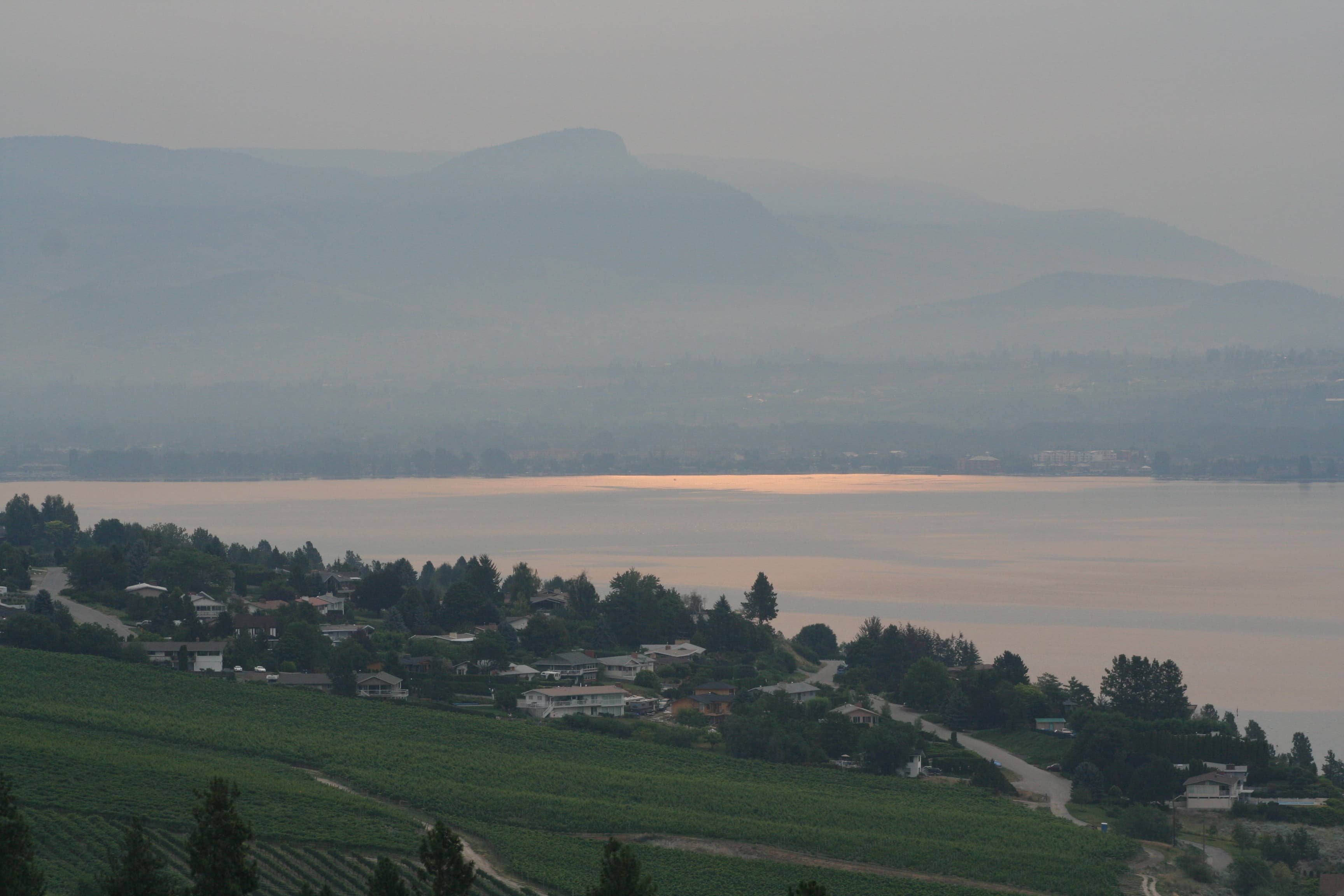
Hillside lots drive West Kelowna's foundation types: walkout and daylight basements are the norm rather than the exception, with one or more foundation walls exposed to open air and the remainder cut directly into the slope. That's a meaningfully different mitigation problem than a fully buried basement — suction point placement and sub-slab communication both depend on how much of the foundation footprint is actually below grade. Crawlspaces on sloped lots are also common, particularly on older west-side properties, and a crawlspace built into a hillside tends to have more direct soil exposure than a flat-lot crawlspace elsewhere in the valley. Newer hillside subdivisions off Boucherie Road and up toward Smith Creek tend toward larger, more heavily engineered foundations, often with structural fill brought in to level a building pad — which changes sub-slab conditions again, in ways that are only knowable from an on-site assessment rather than assumed from the neighbourhood.
What we typically install here
Crawlspace foundations are common here, so crawlspace encapsulation — a sealed vapour barrier with a suction point drawing from beneath it — is the typical install.
See how radon testing, mitigation, and ongoing monitoring work in more detail.
West Kelowna FAQ
Yes. A conventional sub-slab system relies on suction pulling evenly across the slab; a walkout's exposed wall changes that airflow pattern, so we assess sub-slab communication on site before recommending single-point versus multi-point suction.
It's a reason to test, not a reason to assume the worst. Shallow bedrock can mean a shorter path for soil gas, but the only way to know your home's actual level is a measurement — geology tells you why testing matters here, not what your number will be.
Typically with a sealed vapour barrier across the exposed soil and a suction point drawing from beneath it, similar in principle to a flat-lot crawlspace but with more attention to how the slope affects sealing at the perimeter.
It can — imported fill compacts and drains differently than native soil, which affects how freely a suction system can draw air. It's exactly the kind of detail we confirm on a site visit rather than guess at from a lot listing.
Book a test in West Kelowna
Testing comes first. If your result calls for mitigation, we'll design and verify a system for your foundation.