

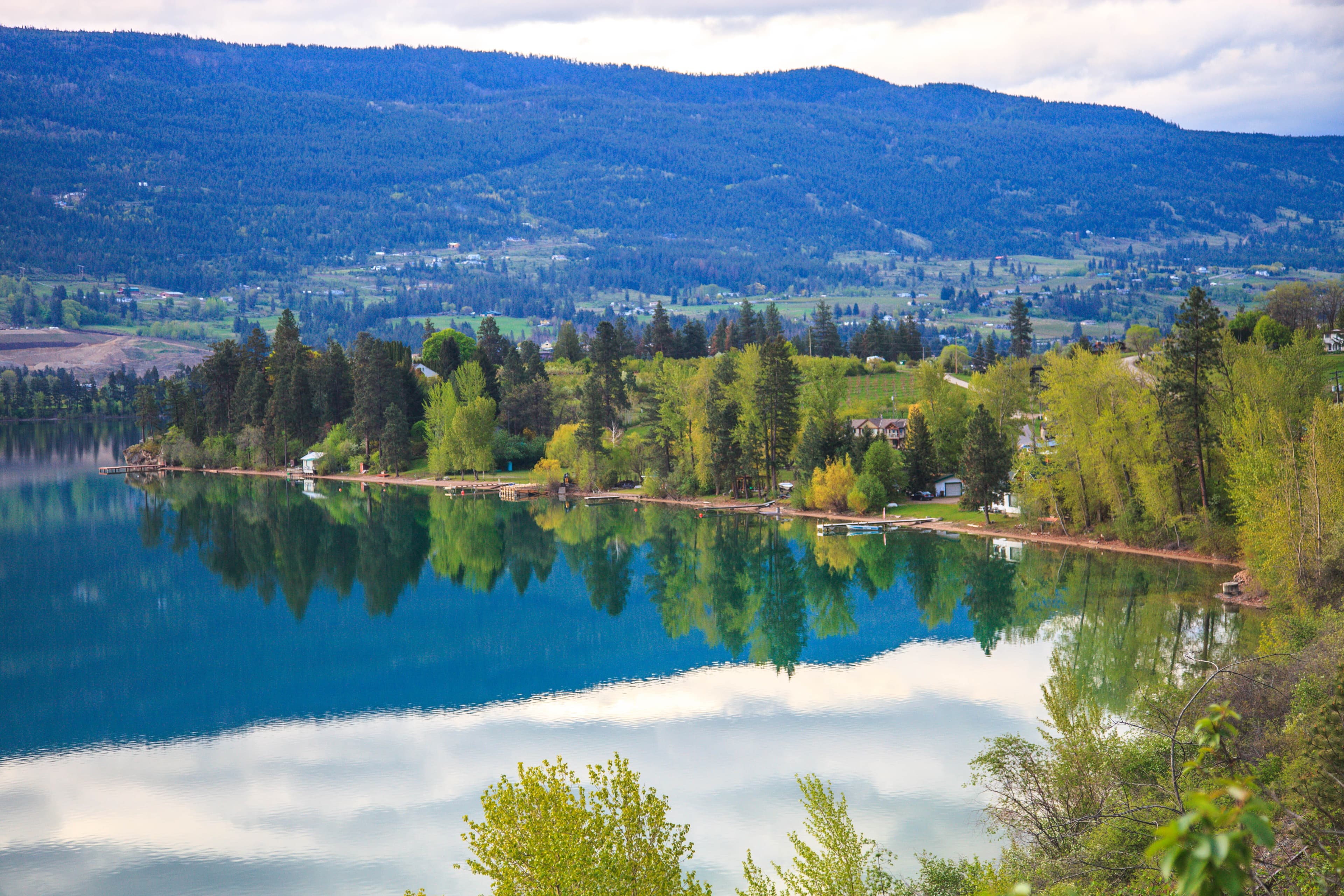
Radon Testing & Mitigation in Lake Country, BC
Radon testing and rough-in consultation for Lake Country's fast-growing subdivisions, from Oyama to Winfield.
What's under Lake Country
Lake Country sits on the bench and valley terrain between Kelowna and Vernon, spanning Wood Lake, Kalamalka Lake, and Okanagan Lake, with a mix of glacial till, sand, and gravel deposits similar to the broader central valley pattern but locally shaped by the narrow strip of land between the lakes. As with the rest of the region, the granitic bedrock of the Okanagan Batholith underlies much of the area, and the varying depth of glacial cover between the lakeshore flats and the upland bench areas around Oyama and Carr's Landing means radon potential isn't uniform across the district. The narrow, lake-constrained geography here means building lots often sit close to one of three separate bodies of water, each with its own strip of shoreline flats transitioning quickly into upland bench — a compressed version of the elevation and soil-depth variation found across the wider Okanagan.
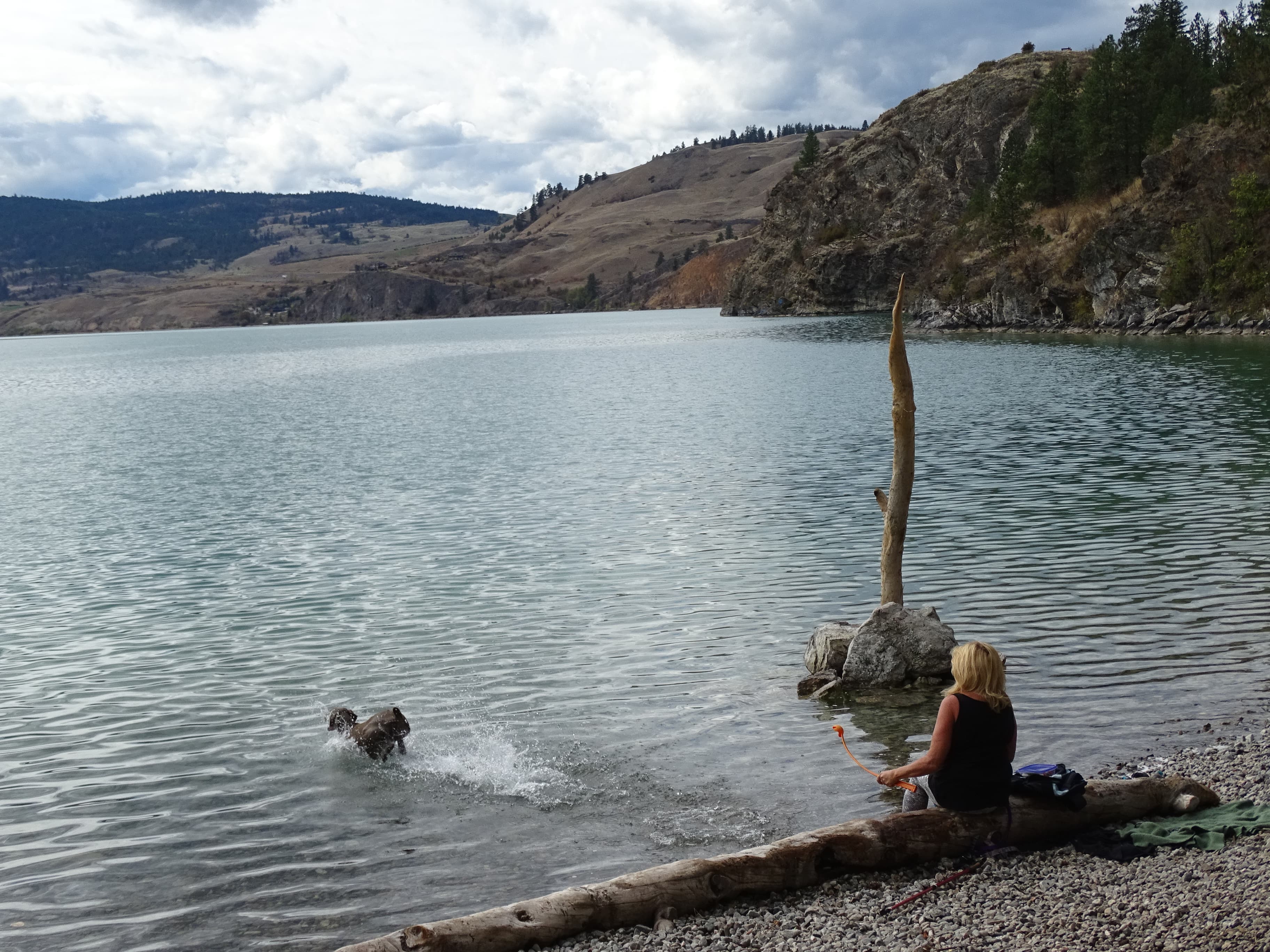
Foundations vary across the area
What sets Lake Country apart is its growth rate: this is one of the fastest-building areas in the Interior Okanagan, and a large share of its housing stock is recent construction with tight, energy-efficient building envelopes. That makes sub-slab rough-in — installing a passive vent pipe and sealed sub-slab layer during construction, before the slab is poured — especially relevant here. Rough-in adds a small fraction to a build's cost compared to retrofitting a finished basement later, and it's worth raising with your builder before the foundation stage if you're building new in Lake Country. Older properties around Oyama and Carr's Landing, predating the district's recent growth, are more likely to have conventional basements without any radon-specific rough-in — for those, a retrofit sub-slab system after testing is the standard path rather than a design-stage consultation.
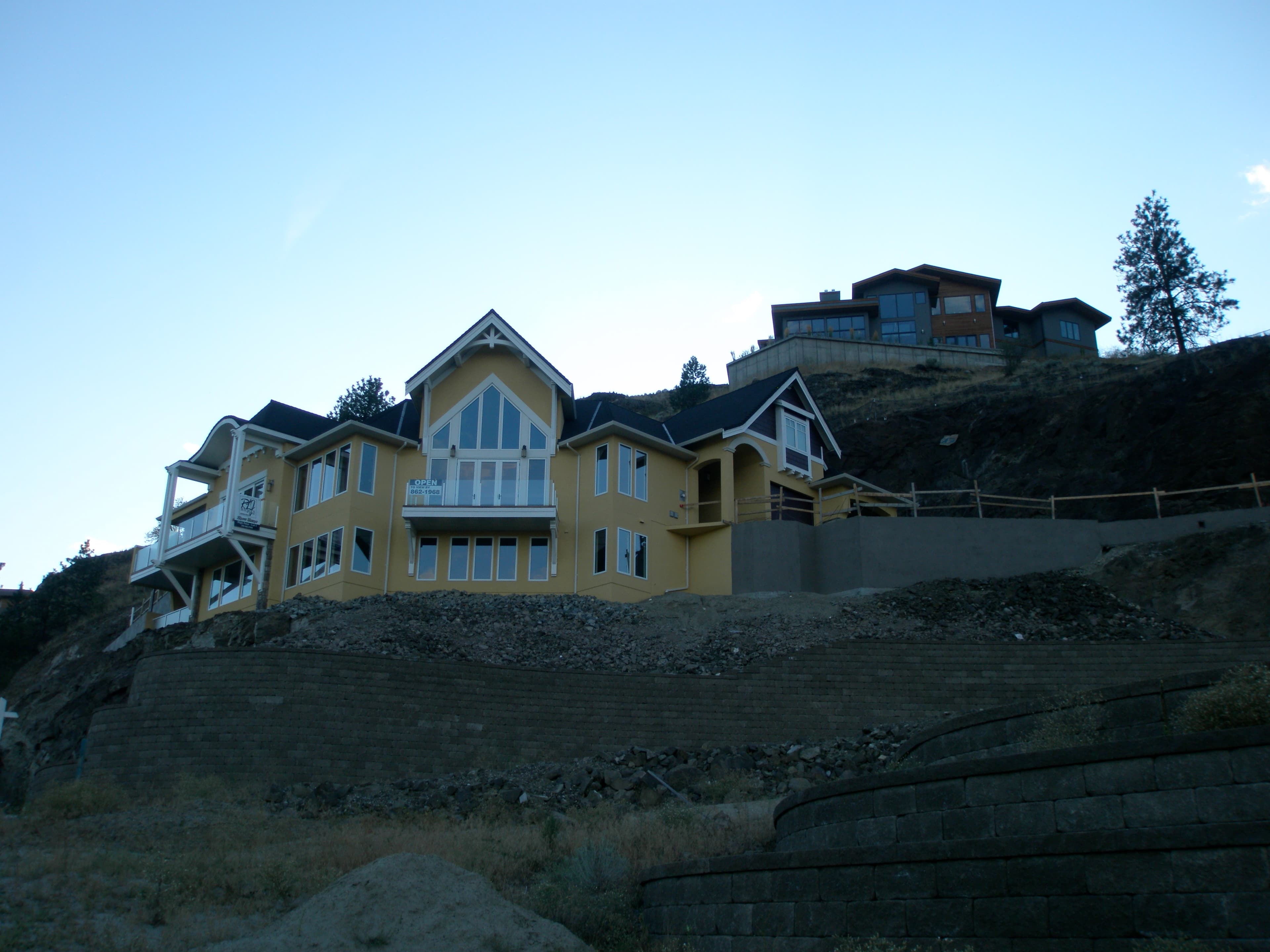
What we typically install here
With so much new construction in the area, sub-slab rough-in at the design stage — a passive vent pipe and sealed sub-slab layer installed before the pour — is often the more relevant conversation than a retrofit.
See how radon testing, mitigation, and ongoing monitoring work in more detail.
Lake Country FAQ
Yes, and the earlier the better — a passive sub-slab vent pipe and sealed vapour barrier are inexpensive to include at the foundation stage and expensive to add after the slab is poured. See our new-construction mitigation page for what to ask for.
No. Tighter modern envelopes reduce natural air exchange, which can let radon concentrate rather than escape. New construction changes the mitigation approach (rough-in versus retrofit) more than it changes whether testing matters.
Bench elevation and glacial cover depth vary across the district, so a result from one part of Lake Country doesn't tell you much about another. Every home needs its own long-term test regardless of which part of the district it's in.
That's common in newer builds — the passive pipe is there, but it was never activated. If a test comes back elevated, adding a fan to an existing rough-in is usually simpler and cheaper than a full retrofit.
Book a test in Lake Country
Testing comes first. If your result calls for mitigation, we'll design and verify a system for your foundation.