


Radon Testing & Mitigation in Peachland, BC
Radon testing and mitigation for Peachland's steep lakeside lots and shallow-bedrock construction.
What's under Peachland
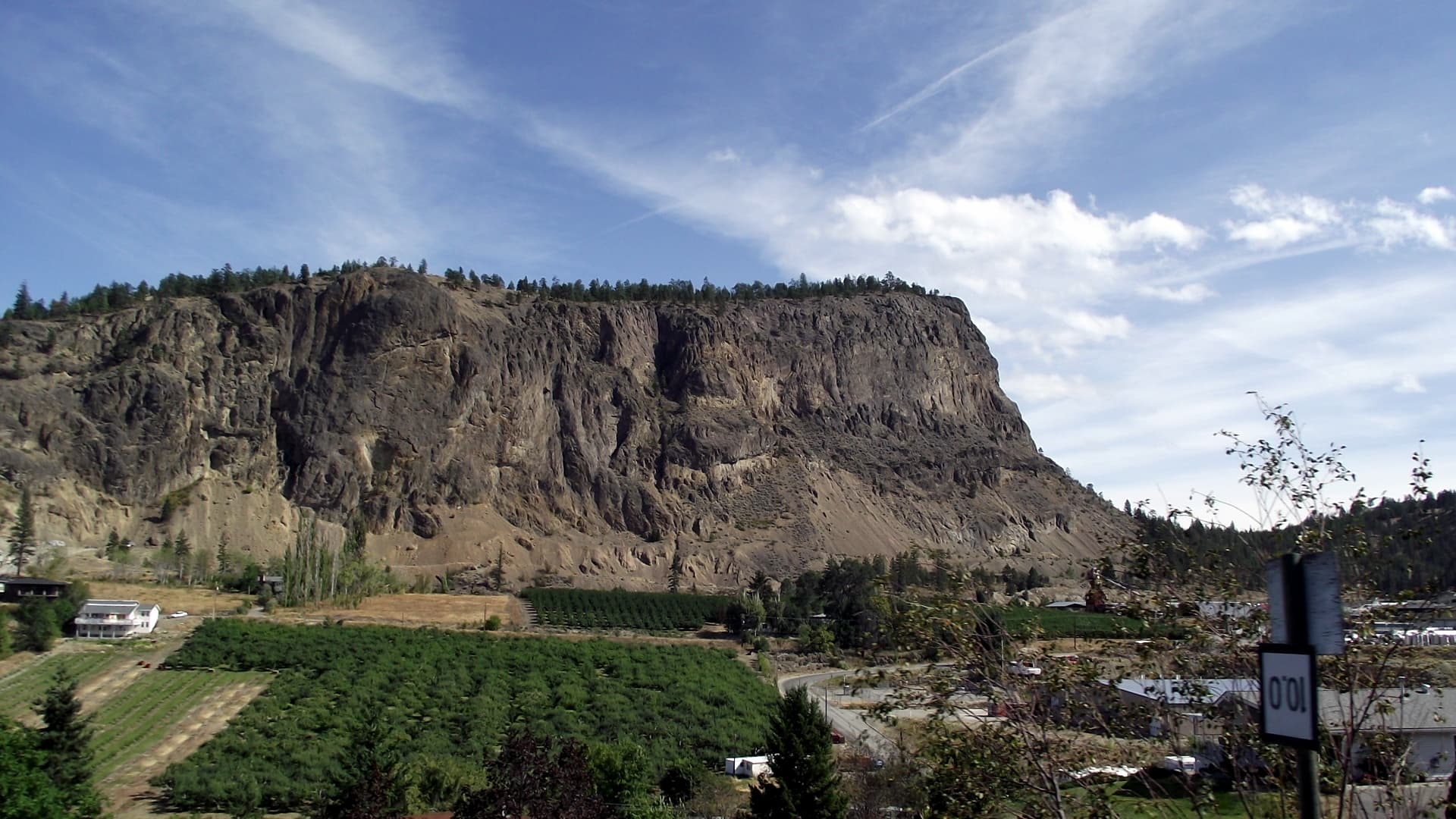
Peachland is built on some of the steepest lakeside terrain in the Okanagan, wedged between the lake and the mountainside along Highway 97. Like West Kelowna to its north, shallow bedrock is common here, and many building sites required significant rock excavation. Where bedrock sits close to the surface, radon generated within it has less soil cover to pass through before reaching a foundation, which is one of the reasons hillside communities like Peachland warrant more testing attention than flatter, deep-soil parts of the valley. The narrow band of buildable land between the lake and the steep slopes above town means Peachland has less of the flat, deep-fill valley-bottom terrain found in Kelowna — most of the community sits somewhere on that slope, with the specific steepness and rock exposure varying block by block.
Foundations vary across the area
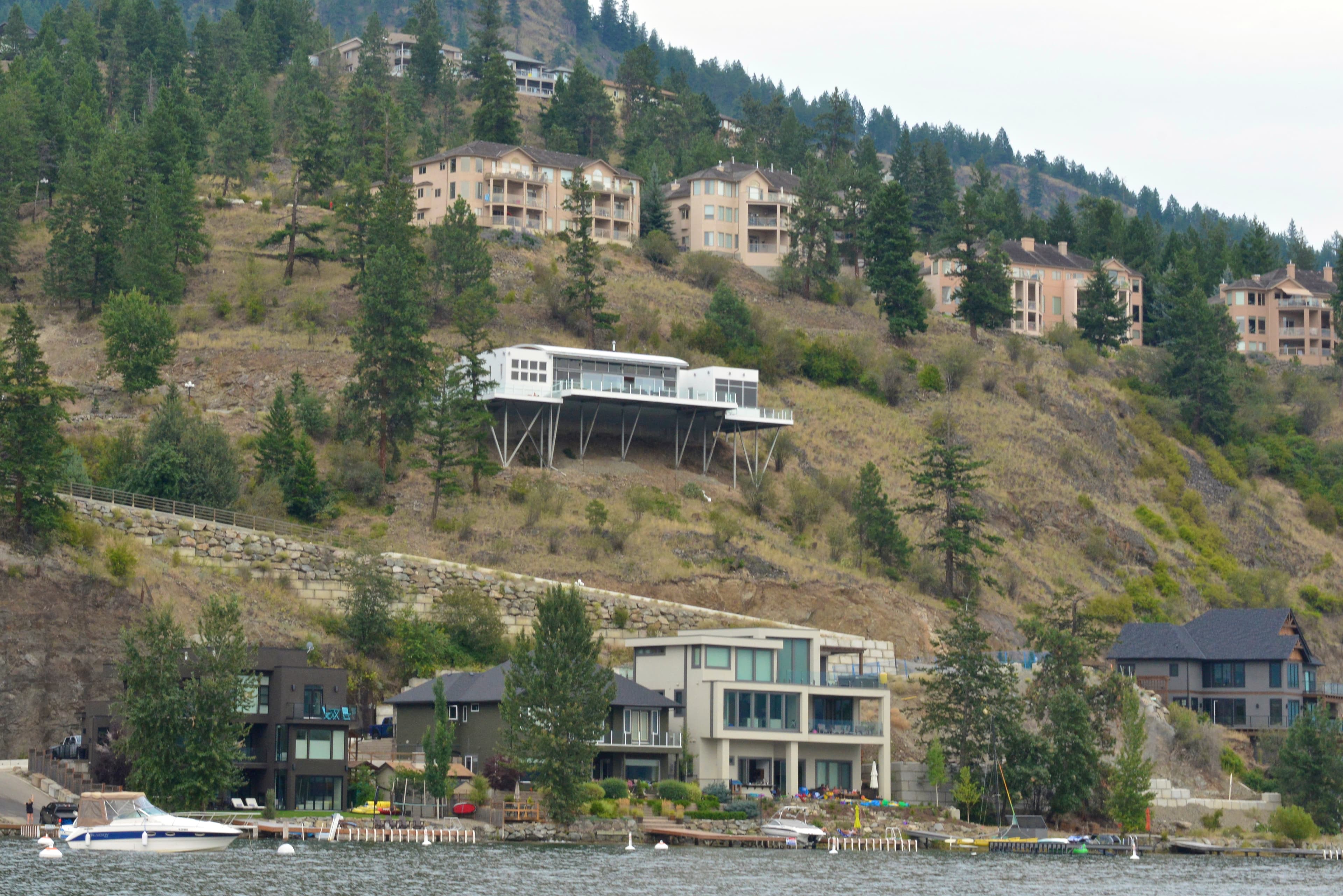
Steep lots mean walkout basements and daylight foundations are the dominant housing type in Peachland, often cut directly into rock or thin soil rather than sitting on deep excavated fill. That kind of foundation changes how a mitigation system draws air — with less soil volume beneath the slab, sub-slab communication testing before installation matters more here than in a deep-fill valley-bottom home, since a system designed for typical soil conditions may need adjustment for a shallow-bedrock lot. Homes along the upper slopes, well above the highway, tend to have the shallowest soil cover in town, while lower properties closer to lake level more often sit on deeper deposited fill brought in during original construction — two genuinely different starting points for a mitigation design within the same small community.
What we typically install here
Crawlspace foundations are common here, so crawlspace encapsulation — a sealed vapour barrier with a suction point drawing from beneath it — is the typical install.
See how radon testing, mitigation, and ongoing monitoring work in more detail.
Peachland FAQ
Not reliably — fractured bedrock close to the surface can actually provide a more direct pathway for soil gas than deep sediment in some cases. Shallow bedrock is a reason to test, not a guarantee of either high or low results.
Yes, but the design has to account for how little sub-slab soil volume there is to draw from, which is why we test sub-slab communication on site before finalizing a system design rather than quoting sight-unseen.
The terrain and shallow-bedrock pattern are similar, which is why we group them under the same mitigation approach, but similar geology doesn't mean similar test results — every home still needs its own measurement.
It can affect soil depth and foundation type, which are real factors — but the only way to translate that into an actual number for your address is a test, not an assumption based on how high up the slope you live.
Not automatically, but it's a detail worth flagging — a foundation wall set against exposed bedrock has a different soil-gas relationship than one surrounded by soil, and it's something we look at directly during a site assessment.
Book a test in Peachland
Testing comes first. If your result calls for mitigation, we'll design and verify a system for your foundation.